Mood Board for “Murder 1 Floor Up”
These images capture the moods, themes and locations of my current work in progress, “Murder 1 Floor Up.”
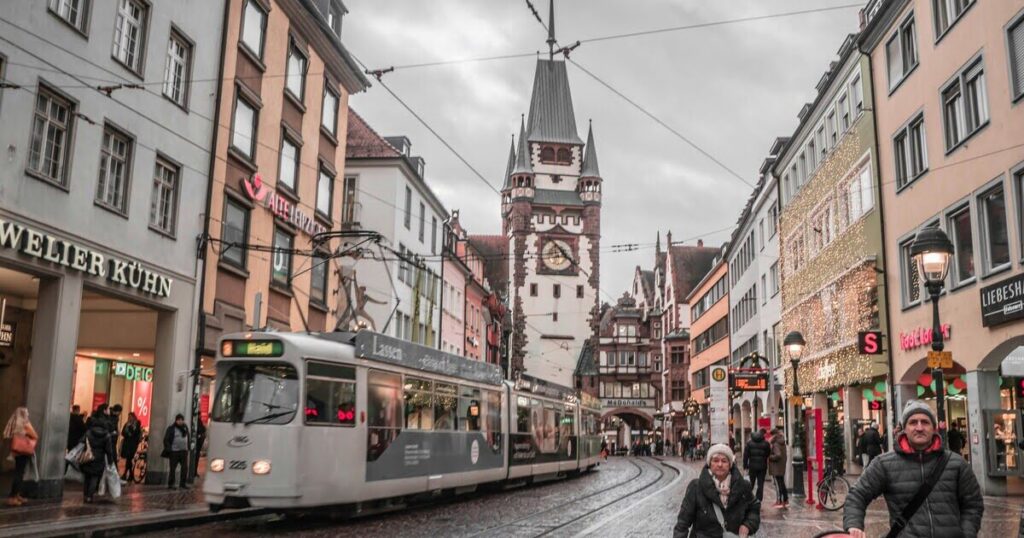
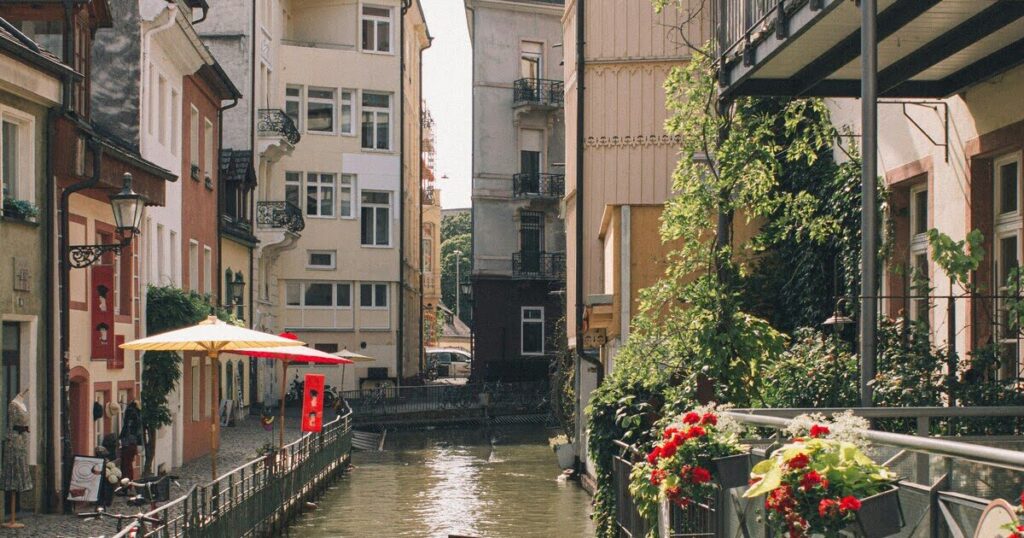
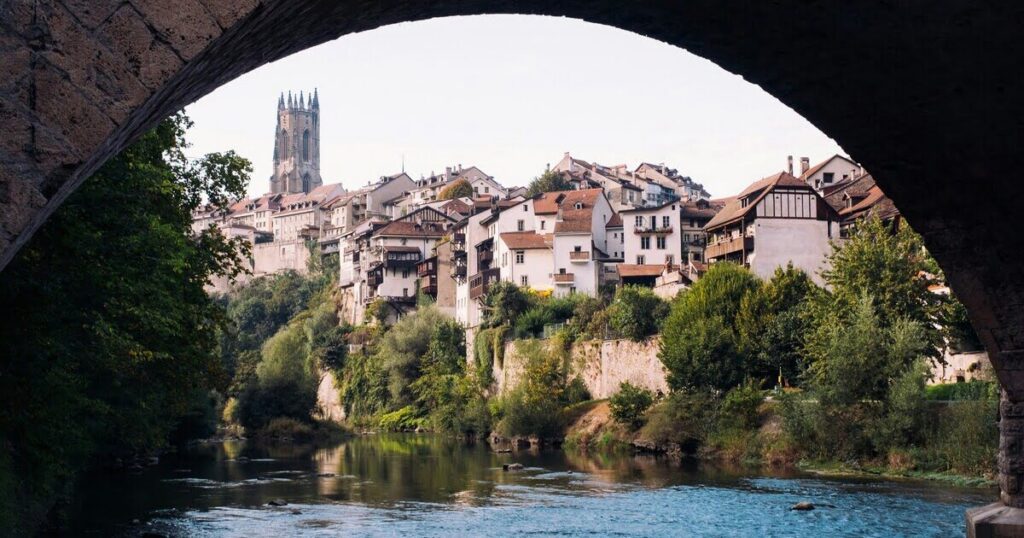
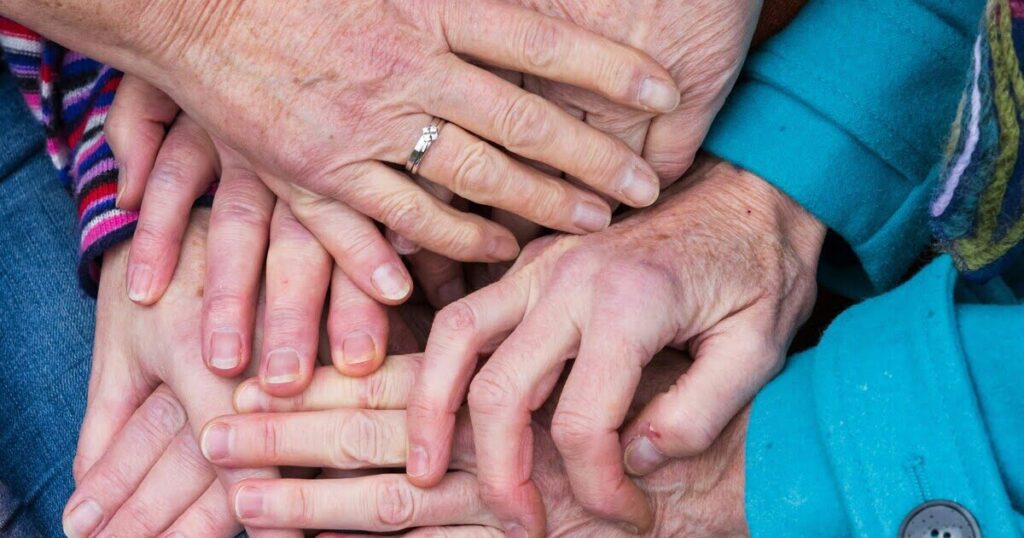
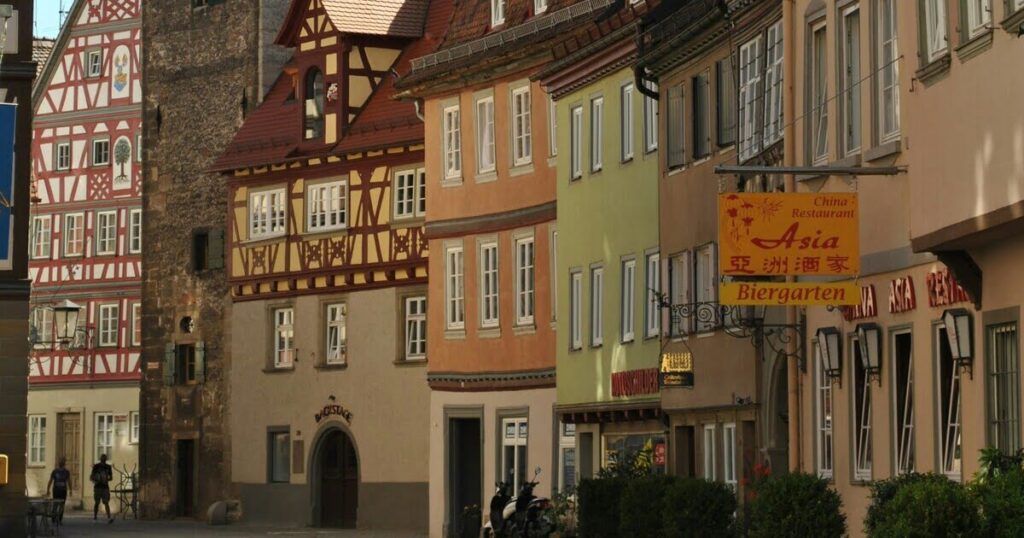
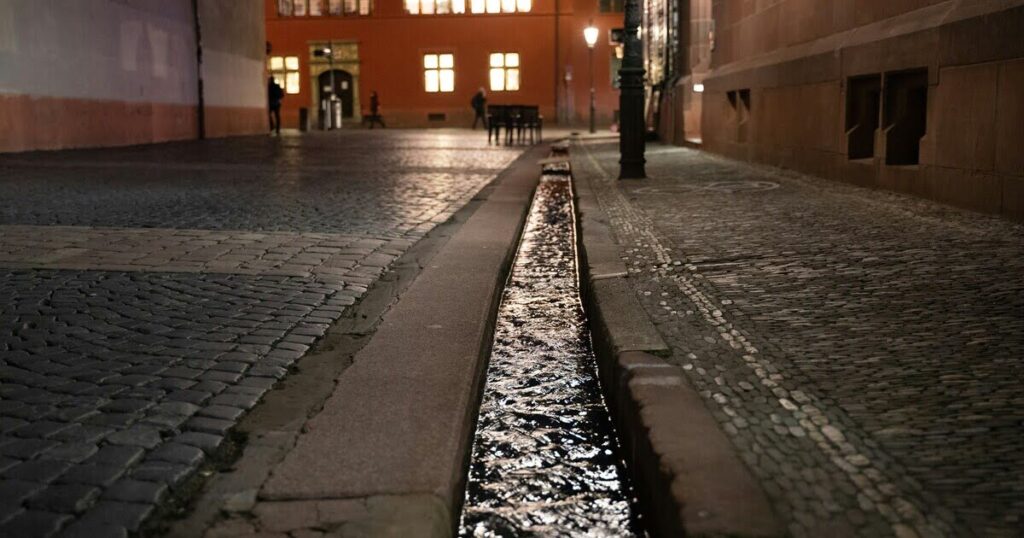
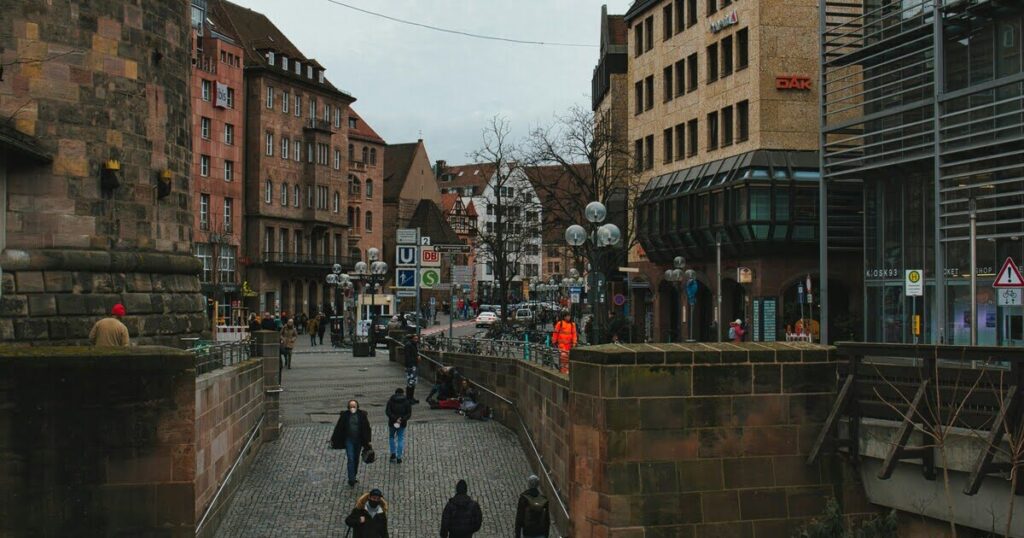
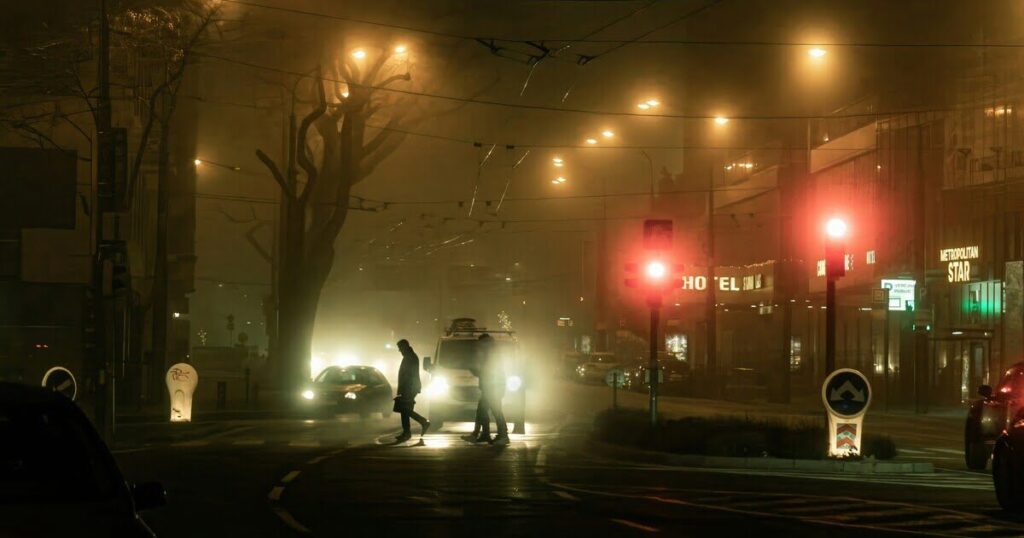
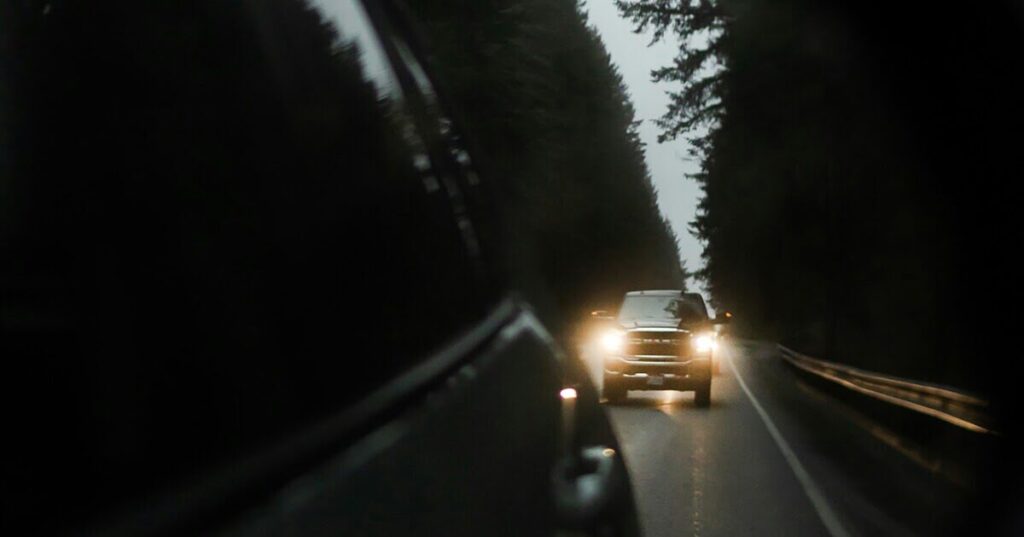
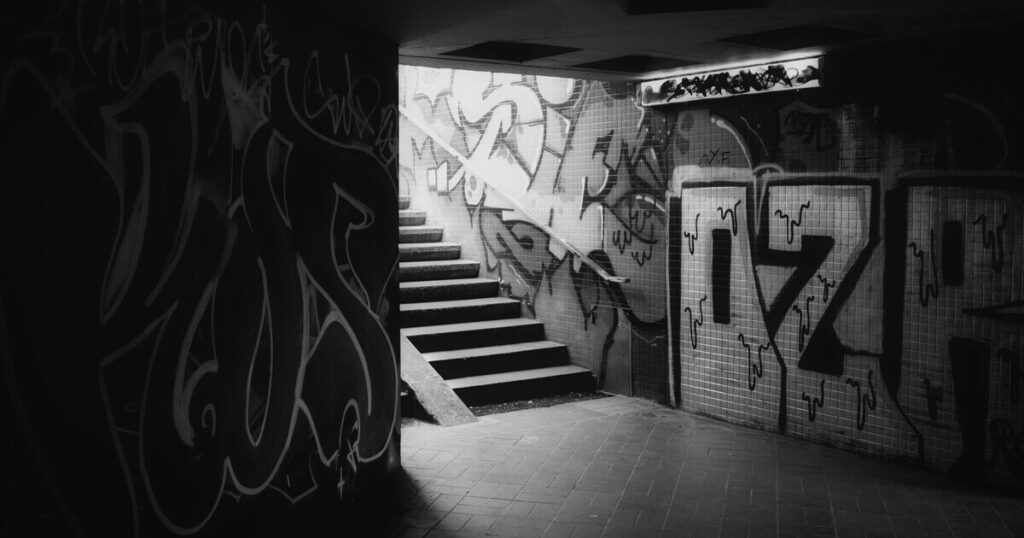
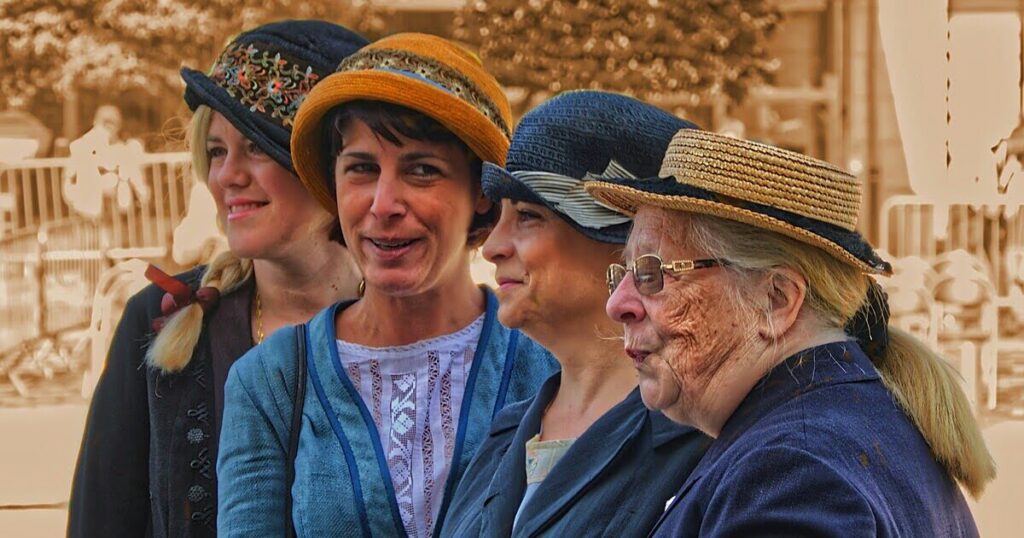
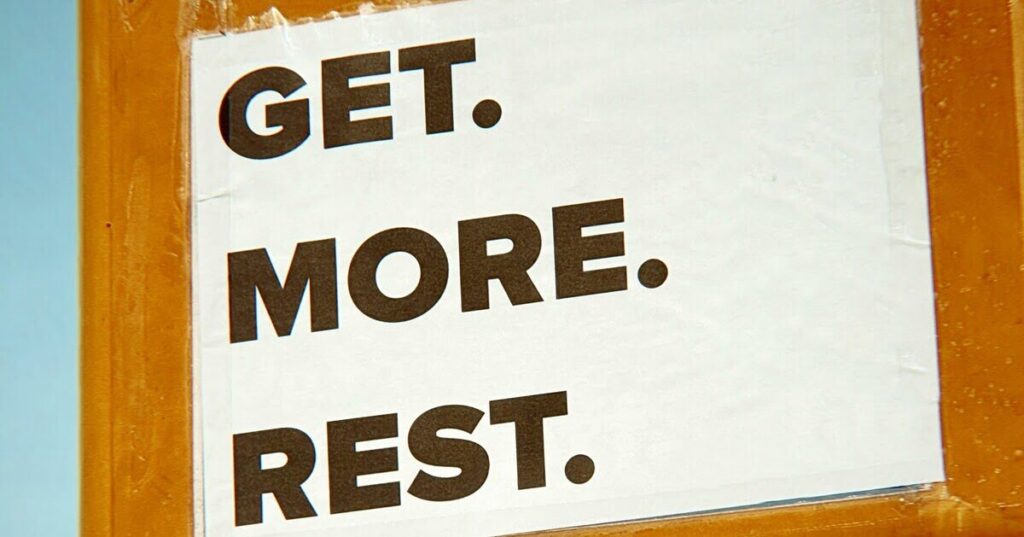
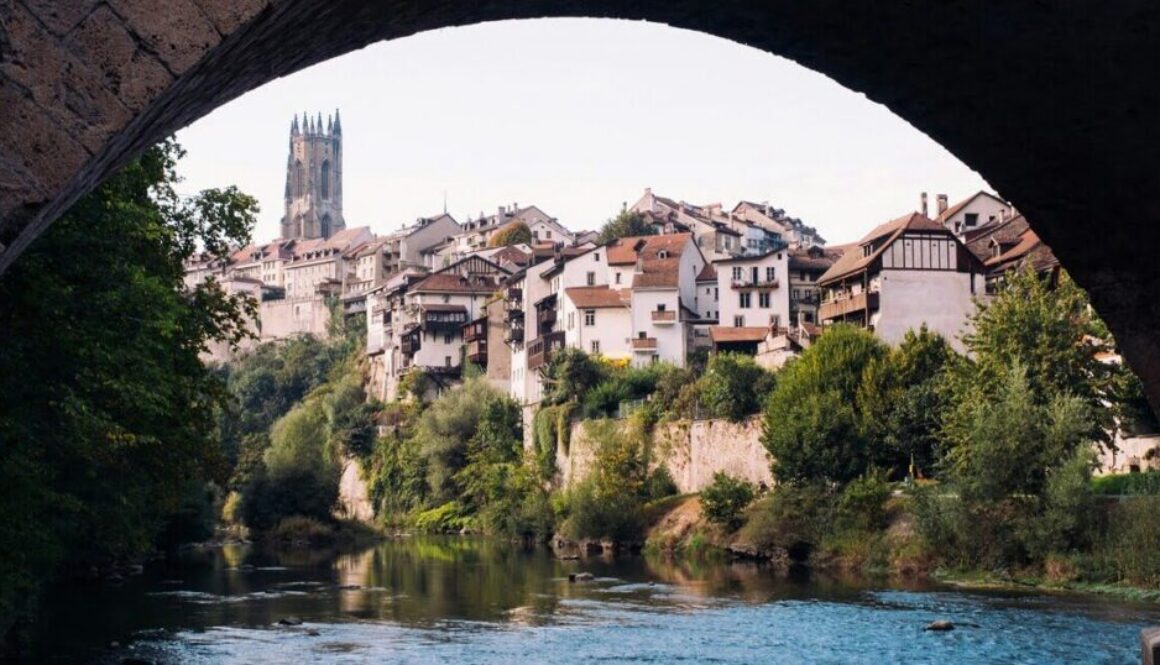
These images capture the moods, themes and locations of my current work in progress, “Murder 1 Floor Up.”

There’s a certain unwritten rule when it comes to literary festivals: the bigger the name, the more carefully orchestrated the appearance. The star author swoops in, dazzles for an hour, signs books under tight security, and vanishes through a staff-only door.
So you can imagine my surprise when I discovered Lee Child—yes, that Lee Child—wasn’t just scheduled to appear at CrimeFest 2025. He was already on a panel the first day, casually, like it was the most normal thing in the world. No fanfare, no entourage. Just the man who created Jack Reacher, sitting down to talk books like the rest of us.
Lee and his younger brother Andrew Child (who has taken over the reins of the Reacher novels) hosted a panel together that was easily one of the most anticipated sessions of the weekend. But rather than the polished, press-junket energy you might expect, it was deeply personal—two brothers talking shop in front of a crowd that adored them.
They spoke candidly about how their writing partnership works, what it’s like to carry forward a legacy without making it feel like a hand-me-down, and how their sibling bond fuels their creative process. There was real humor in the way they poked fun at each other – playfully wry bickering one moment, mutual respect the next.
There was one particular story that had the room laughing—a bit of Reacher-style logic applied to some real-life family friction. (Let’s just say: if you’re ever in a pub quiz with the Child brothers, back away slowly.)
And speaking of quizzes…
It’s said that a Reacher novel is sold every nine seconds. And yet somehow, Lee Child remains one of the most humble, approachable, and deeply present writers I’ve ever encountered.
He didn’t just show up for his panels and disappear. He stuck around. All weekend. He was often one of the last to leave. And even after most of the attendees had headed home on the final day, he showed up one last time – as team captain in the festival’s closing event: a crime fiction trivia battle between visiting authors and the festival organizers.
The organizers were formidable—walking encyclopedias of crime lit with a possibly unfair home-field advantage. Lee held his own, though, rattling off obscure facts and lesser-known book titles like it was second nature. His knowledge of writing trivia is, frankly, astonishing.
The organizers won (and I strongly suspect the questions were stacked in their favor), but no one seemed to mind. It was just one more way Lee Child showed up—not as a literary godhead, but as a man who clearly, deeply loves the world of books and writers. Captain of the trivia team on the very last day? That says everything.
If seeing Lee Child was surreal, meeting Mark Gatiss was something else entirely. I knew he’d be there to promote his new show, Bookish, but I didn’t expect to actually meet him—let alone have a moment I’ll probably be replaying for the rest of my life.
He impressed me immediately—not just because of who he is (actor, screenwriter, novelist, and half the creative force behind Sherlock and Inside No. 9)—but because of how present he was. He wasn’t scanning the room for someone more important. He wasn’t hurrying away from the fans. He was completely in the moment.
We exchanged a few words – just enough to mumble how much his work has meant to me – and then, unexpectedly, he hugged me. Just a warm, human, unscripted hug. I was stunned. And deeply touched, wishing I had the social dexterity to speak coherently with him, and without feeling like I might pass out.
Mark Gatiss wasn’t performative or “celebrity charming.” It felt sincere. And I know I wasn’t the only one—everyone who interacted with him came away a little bit glowy.
Gatiss’s panel about Bookish was a fascinating peek behind the camera, but also before the camera ever got rolling. The character, the set-up – the entire show is entirely his own creation, and hearing him talk about it was a rare insight into how deeply personal projects come to life—and what it means to collaborate when those projects extend across media.
He wasn’t alone on stage. The author who’s been tasked with adapting Bookish from screen to page also joined the conversation. The two of them discussed what it’s like to move a story from one medium to another, and how you preserve voice and tone without making it feel like a simple transcription.
There was an unexpected honesty to the conversation—how difficult it is to translate mood and atmosphere from screen to page. They didn’t gloss over it or try to sell us something. They just told us the truth: adaptation is art, and it’s messy, and collaborative, and not always easy. Their second season was already green lit before the Pilot was aired.
What struck me most wasn’t the fame of the people I met. It was how down-to-earth, generous, and genuinely enthusiastic they were about the craft. These weren’t celebrities trying to move books or shows. They were writers talking about writing. Creators talking about what drives them. Siblings teasing each other in public. Storytellers letting us into their process.
And that hug? That hug is staying with me.
I only discovered CrimeFest in 2024 – a little too late to make it. But then came the email: CrimeFest 2025 would be the last one. I’m not sure what possessed me more – FOMO, loyalty to the crime fiction community, or pure adrenaline – but I booked my ticket almost immediately.
As an American who reads widely and writes slowly, I didn’t know what to expect. I’d never attended a UK book event before. I imagined reserved, slightly distant crowds, authors whisked off to private green rooms, and panels that kept newcomers like me firmly on the fringe.
Instead, I found myself standing in a Bristol hotel lobby, saying goodbye to my husband for the day, when a kind woman turned to me with a warm smile and made a gentle comment about couples still being affectionate. It took me by surprise, and I wasn’t sure how to respond except to say thank you. She lightly touched my arm, and we exchanged a few pleasantries — nothing momentous, just human warmth. It was only later that I realized I’d been talking to Ovidia Yu — one of the most prolific and celebrated mystery authors writing today. That brief encounter stuck with me, and it set the tone for what CrimeFest turned out to be: welcoming, human, and full of surprises.
One of the best things about this event is that it wasn’t just another book fair. It didn’t feel stratified. You could bump into a debut novelist at the tea table and find a literary legend on the next barstool. I later asked Vaseem Khan — the brilliant author, President of the CWA, and one of my former online writing instructors via Curtis Brown Creative — about something I’d overheard: that British book events usually keep the “big names” separate from everyone else. He confirmed that was true, and that CrimeFest had intentionally modeled itself more like an American-style con — open, egalitarian, inviting. Even as yet unpublished writers could sit on panels, if their title was forthcoming. No one was off-limits.
That was more than just refreshing — it was rare.
I first spotted Vaseem during a break between panels. He was seated in the hotel lobby with two others — people I instinctively assumed were high-level publishing types: agents, perhaps, or editors. I hovered for a second, unsure whether I was intruding on something more professional than I had any right to join. As it turns out, I was — one of them was a well-known book reviewer, and the other, known in the crime fiction world as “The Doctor,” is the go-to consultant when authors need to ensure their fictional murders pass the believability test. Ultra professionals, indeed.
And yet, Vaseem saw me hesitate, smiled, and waved me over.
It was the first time we’d met in person, and the group couldn’t have been more welcoming. Vaseem shared that he’d recently been approached to write novels from the point of view of Q — yes, that Q, from the Bond universe. A remarkable opportunity, and he spoke about it with his usual humility and clarity. Sitting there, I realized how easily CrimeFest blurred the line between “audience” and “insider.” There was no stage and green room vibe here — everyone was part of the conversation.
What truly floored me that first day was seeing Lee Child already on a panel — as casually as if he were just another writer on the program. Authors at his level are usually saved for a keynote or one major appearance, then whisked away into the shadows. But Lee wasn’t just making a cameo.
He was there — fully present, each day, attending panels, chatting with attendees, blending into the fabric of the event without ever diminishing his natural magnetism. From what I gathered, he was one of the last to leave most nights.
He has that quiet charisma — the kind you can’t fake. And yes, the glint in his blue eyes tells you everything you need to know about the man who created Jack Reacher.
His presence helped anchor something about CrimeFest that I didn’t realize I was hungry for: a literary event where everyone is treated like a peer.
By the end of the first day, I was already overwhelmed — not in a bad way, but in the way you are when you realize you’ve stumbled into something more meaningful than you expected. I went with the notion I’d attend the panels, maybe meet a writer or two, and quietly soak in the energy.
Instead, I was in it. Talking with authors whose books line my shelves. Sitting beside strangers who became fast friends. Hearing stories I would never have heard if I’d stayed home.
And being gently tapped on the shoulder by Ovidia Yu — repeatedly, as it turns out, over the course of the event — with kindness and camaraderie that reminded me this was more than just a conference. It was a community.
For several years, my little sister had ballet on Saturdays, and while she was dancing, Mom went fabric shopping. They’d be gone all day, eating out at a restaurant together. These were the best Saturdays of my youth, not because they were gone, but because Dad and I would be “baching-it.”
Baching-it meant we’d be behaving, essentially, like bachelors.
Dad would hold up a finger, “What’s the one rule? First work, then play.” We’d typically start with something in the garage or the back yard, anything that required heavy-lifting. Any physical work the other family members weren’t strong enough to do was on our list.
It was rough work, involving lots of sweating, and panting and when injury struck, definitely swearing. Loudly, and it was only all right because the gentler ones of us weren’t there to hear it. “We won’t tell Mom,” was the agreement.
If we still had energy, we’d shoot hoops. Dad loved basketball and so did I, up until they changed the rules about dribbling. It was a better, more challenging sport, back then.
Dad would call me his partner, like we were cowboys. Never mind that I was a girl. That wasn’t yet relevant.
As reward for our work, Dad would prepare heaping plates of very special food, the kind we could only eat while baching-it. We each had two hot dogs smothered in chili beans, topped with a mountain of grated sharp cheddar. I do believe it was the entire block, divided in half. We’d chug malt sodas and watch Perry Mason, first black and white episodes, then color.
We’d shower and get into clean clothes after food, before the girls returned from shopping and ballet. I’d go to bed with spent muscles and the satisfaction of having used them well.
The giant yellow flowers in Gramma’s garden are taller than I, with rough faces, dark brown, wrinkled. Their fuzzy stems stand thicker than my thumb and I‘m not allowed to touch, do not touch, do NOT touch, do not, stand here next to Gramma, right here; it’s a little scary.
The tallest flower’s proud, chin tilted to the bright, glaring sun, wide leaves pressing the other flowers away: step back. I need to squint against the sun to look at it, and duck away. A friendlier flower stands closer, to my side. It’s looking down at me, but sideways, shy. A bumblebee tickles its face, and the flower winks it away with the flutter of a petal. The largest of its leaves curve towards me; it wants to pat my shoulder, my head, smooth my hair. I can tell, and it smiles because I can tell.
I like that flower. It’s nice.
Gramma asks me if I know what kind of flowers these are.
I’m not sure about the big one, but this one seems nice, I point.
Gramma throws her hands over her head, howling laughter, then slaps her knees. Both hands, I am so funny, but I don‘t know why. It confuses me.
Well, I think you’re right about that, but that isn’t what I mean. Do you know their names?
I shrug. Mary?
She‘s very surprised at my answer, she’s smiling very big with her eyes wide open and glossy. Don’t you know what these flowers are called?
I really don’t know what she wants from me. I already answered this question. My bottom feels itchy, uncomfortable. The sun shines in my eyes whenever I look up at Gramma. It‘s right behind her curly auburn head. My eyes are tearing a little, my nose tickles and I rub at it.
Her brow furrows. Don’t you know that different flowers have different names? Like a rose. A rose is a type of flower. What type is this? You don’t know? Well, take a guess.
I feel like maybe I‘m in trouble, I‘m doing something wrong. Lion flowers?
Gramma smiles but shakes her head, pretty good guess. They’re sunflowers, she says, but I don’t think they look like the sun. I think we should call them lion flowers, but she says no one will understand if we call them that. It’s too close to dandelions. I realize she’s right, but I’m not certain it’s a good reason. I tuck myself under the leaves of Mary Flower, shielded from the sun, but the bumblebee doesn‘t want to share and buzzes in my ear. I squeal, and Gramma says settle down, let‘s have tea in the shade.
The boy looked like Chris Pine, and his name was Derik; he liked another girl. He’d chase her around our school’s grassless playground, she’d scream. It looked fun, so I joined. Another boy started to chase both of us girls until Derik told him to stop.
There was a hard, sandy hill, pebbly, on that desert playground. Slippery. Sporty Derik bounded up like a goat; I wasn’t so sure. From behind me, a teacher goaded, don’t give up now, you can do it.
I ran, slipped and fell, skidding down the craggily hill. I ripped my shin, hands. Mom was angry; my new jeans were ruined.
Next day, we played again. That same hill was before me, my teacher encouraged: don’t give up, try again, you can do it. I went up, and fell badly. Same knee.
Mom did her best to clean the wound, but a few pebbles were stuck. I pried them out with my fingers, crying.
Third day.
I stood at the foothills. Derik loomed at the zenith, his shadow long. Tumbleweeds rolled with the wind, a hawk screamed.
He squinted, told me to just give up. This wasn’t playtime. It was the hard work of doing my duty, to complete an unfulfilled task. The teacher’s voice came like an Olympics announcer, “Will she do it?” I grit my teeth: Go Hard.
I fall hard. My last pair of jeans destroyed, my knee throbbing hot pain, hands shredded. I’m gasping for air between jagged sobs, my entire leg wails.
“Stop chasing me,” he said. “I don’t like you.”
Blazing fury erupted from deep down in my gut. Panting and seething, “I’m bleeding! In pain! Is that all you can say? You’d treat a dog better!” His apathy was loathsome, I couldn’t stand his face. “Well guess what? I don’t like you either.” I meant it, too.
Mom couldn’t work on my knee anymore, she got queasy, faint.
Dad tried. Then Mom, and Dad again. Neither could do it for my terrible screams and bleeding. It was up to me.
I needed tweezers to remove pebbles from my knee. So many of them, embedded. Dad gave me an old leather watchband: bite on that, it’s what cowboys do. Pain made it hard to see through tears, and the blackness that would encroach, then fade to sight again. I dug them out, growling around the leather, tears and sweat flying off my face, nearly blacking out but coming back to get the next one.
Next day, no running. No chasing. Derik apologized. I think he meant it.
Mom’s in the pantry, shaping dough, thick and caramel-brown, into doll figures. They’re like gingerbread men but fancier, because they’re girls. All the shapes are round and smooth, sturdy. Two cookie sheets, side by side, are atop the washing machine and dryer. Mom works, making the pans teeter metallic, loud. I ask why she’s here, not in the kitchen. She needs more space; the countertop is too shallow. This reminds her of my great grandma, and how she’d prepare Matterhorns on the washer and dryer. I remember too, and ask if she’ll make frosting like Great Grandma used to make. That was yummy. No, she’s going to paint faces on these, and clothes, too. No frosting. Paint.
She rolls up a ball of dough and stuffs it into a garlic press. The dough comes out looking like dollhouse pasta. Carefully, she cuts it into swaths of hair for the dolls, thick ponytails and wavy bangs. Mom smells like salt, dough, sunshine, and Oil of Olay.
Can I snack on some cookie dough, and I’m desperate but she says no, the dough would make me sick. It’s one of those. Grandma explained about dough with eggs in it. Okay, I’ll wait until after they’re done, but Mom says no, these cookies aren’t for eating. They’re for decorating the Christmas tree. Seems like a terrible waste.
She needs toothpicks for shaping the mouth, and heads to the kitchen: don’t eat the dough. Okay, but I take a tiny bit, just a smidgeon.
Nearly vomit. I spit the wad, smaller than a pea, into my hand. I wipe my eyes dry, rub my sleeve across my nose, and Mom comes back. Did you try some? No. Good, because I don’t know what it might do to you. (I know.)
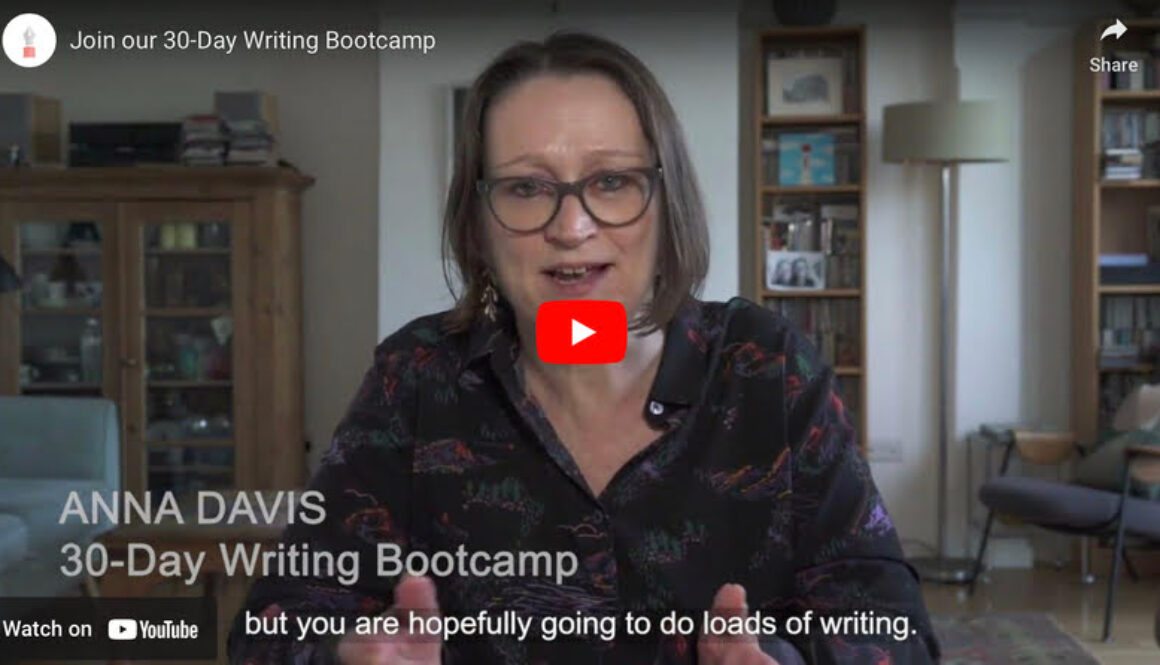
I’m sharing this announcement because I think this deal is amazing. CBC is offering a month-long writing course for only a pound per day. I’m seriously doing this.
Join with me! It’ll be fun.
Coaching is from none other than Anna Davis, best-selling author, founder and director of CBC.
Here’s the link for COURSE DETAILS. I’m in.
As originally published on Poetry Super Highway, editor Rick Lupert, Los Angeles, California, August 2022.
Windswept gatherings of confused moths
cloud over and flitter across
my speckled memory, moving,
flickering
candlelit flowers, held up above, hovering
over
such
white linen, rough
woven dusty with peachy
sprinkles that sparkle, sparkle
as a twinkling
glittery, and
shine. Just like
dead confetti,
angelic mysteries, spread out and about and unorganized as
this and these,
my thoughts of what was
As if there, their
unheavenly scissored up, snipped and cut
snowy cooled
insistence, unsated and sticking
to my attention
lazy, bump, thump
tacked heavy to jazzy sax beats
beating soft,
a stranger
wanting more space on the train
just tapping steady, beating softly
at my shoulders, but I blink away
your gaze and
whatever there was
Toss it, again
your smile and then
a strapped touch, thick in emotion
I do not want to remember
or consider this part
of this eventual
go away, but-. Your face (damn it)
                         (what you said next)
and then another *thing*
that I used to like
petals down, slow and sloppy
out the window I cannot turn away
anymore
from the window and in your hair
                         over by the window
breathing vanilla musk kisses and Daring
Your smirk should not be in my mind, dragging
through me, too much
my old unwanted memory feeling brushed up to a thick stuff,
combed up velvet
fingertips bent,
earth spinning outside our own seams
with us and I’m still
dizzy, becoming
a bubble sipped up
dripping,
running away from what absolutely have to be dried-forever thoughts,
away, then
a drop, a
petaling sparkle, dusted
away, then I realized it, I can wait for
your return, your next visit,
your revenge, too
                         your comeback
of what never really was. I can.
Fingertips bent,
I rake up and through
past you
I’m way past you
and all that
combed up velvet.
◆
Read about my experience being showcased on Poetry Super Highway as a Poet of the Month right here.
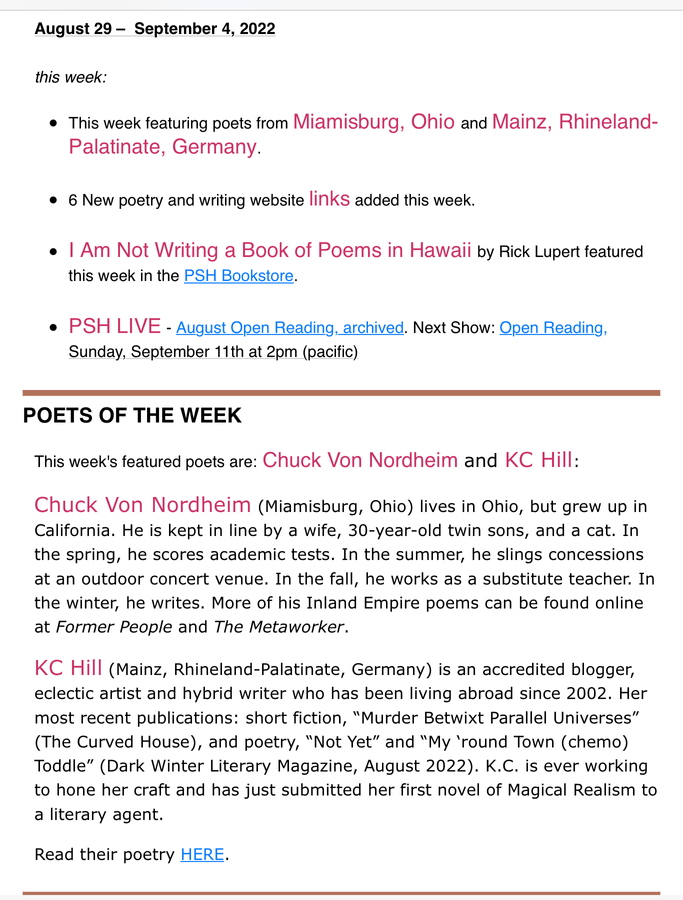
It’s quite a big deal for me that this week, I’m a Poet of the Week on the Poetry Super Highway for my poem, Combed up Velvet. I am so happy about the way Editor Rick Lupert has helped to champion my work, and just wanted to share that with you.
Just below is a screenshot. I was still waking and blurry eyed when I read the news. It actually took me a moment to realize that the featured poet from Mainz, Rhineland-Palatinate = ME. I’m that one.
Yes, I did know I would be featured. It was still a surprise seeing it in print like this. In an email. In my inbox. From a resource I frequently read and where I’m subscribed.
I was even more thrilled to see that further down the newsletter, Rick Lupert had included a special link to my website! Here’s a screenshot of it.

(Note: what you see below is just a screenshot. The links shown are just a picture of links, quite unusable. A real link is coming! Promise.)

This poem is one where I wanted to express a story, one that feels emotional and vibrant only because of the words used to describe what’s happening. Here’s an excerpt:
Windswept gatherings of confused moths
cloud over and flitter across
my speckled memory, moving,
flickering
candlelit flowers, held up above, hovering
over
such
white linen, rough
woven dusty with peachy
sprinkles that sparkle, sparkle …
}} Click* (and scroll down) to access this poem at Poetry Super Highway.
Poetry Super Highway, edited by Rick Lupert, Los Angeles, California, August 2022.